Bench Desks vs Individual Office Desks: Which Is Better?
Choosing the right desks for your office involves more than finding furniture that looks good. The layout of your workstations can influence how employees communicate, concentrate and move around the workplace. It also determines how efficiently you use your available floor space.
Two of the most popular options are bench desks and individual office desks. While both provide practical working environments, they offer different advantages depending on your team’s size, working habits and requirements.
Bench desks are particularly popular in open-plan offices where several employees work alongside one another. Individual desks, on the other hand, provide dedicated workspaces and greater freedom when arranging furniture.
So, which is better for your business? In this guide, we’ll compare bench desks and individual office desks, looking at their advantages, disadvantages, costs, sizes and suitability for different working environments.
What Are Bench Desks?
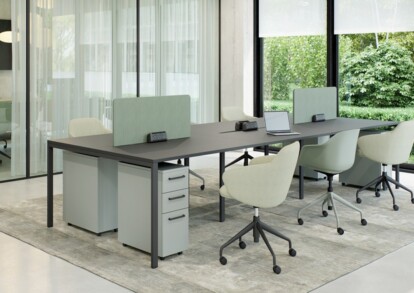
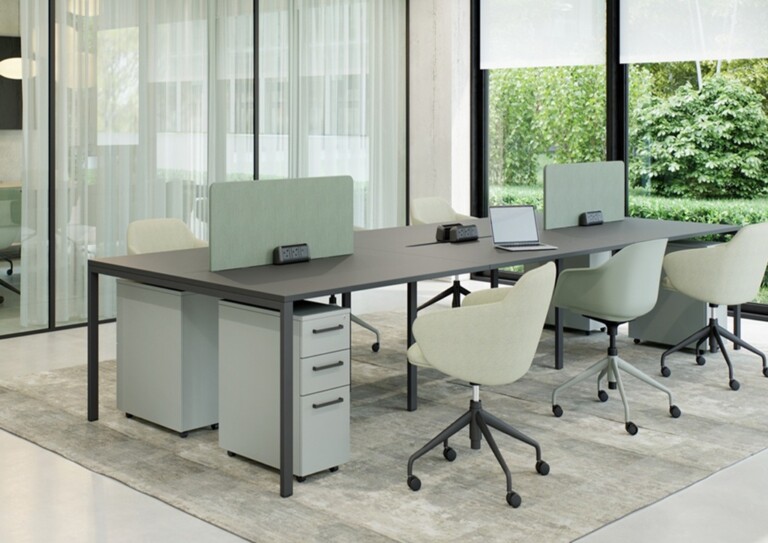
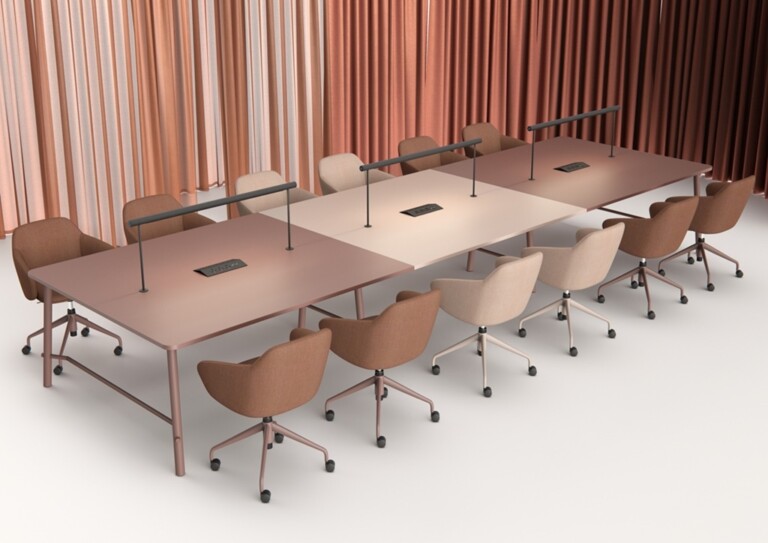
Bench desks, also known as bench desking systems, are workstations designed to accommodate multiple employees within a connected desk arrangement. Rather than providing every employee with a completely separate desk frame, bench systems often share structural components to create a continuous working area.
They are commonly arranged in groups of two, four, six or eight workstations, although larger configurations are possible depending on the furniture system.
Bench desks are particularly suitable for:
- Open-plan offices with multiple employees.
- Teams that regularly communicate and collaborate.
- Businesses looking to maximise available floor space.
- Hybrid workplaces with shared workstations.
- Growing organisations that need coordinated desk layouts.
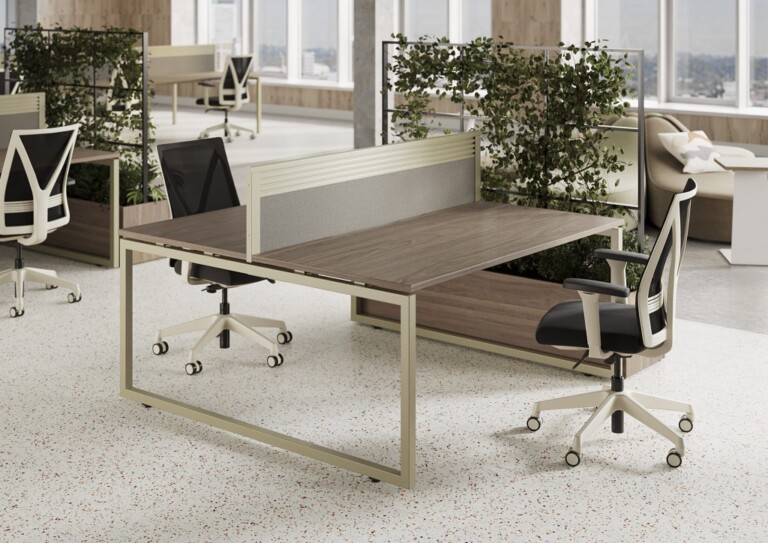
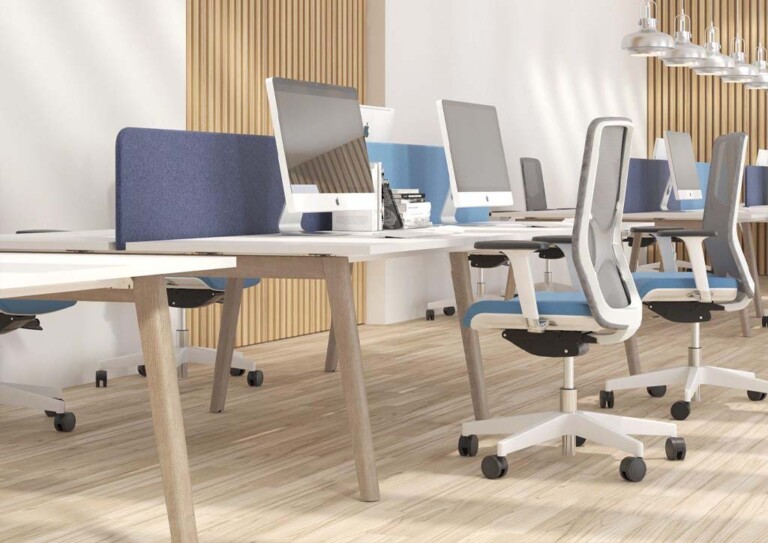
Modern bench desks can also incorporate privacy screens, cable management, monitor arms and individual storage to make each workstation more comfortable and practical.
At Leicester Office Furnishers, our bench desking range includes systems such as Apex, Gianni, Evolution and Nova Wood, offering different finishes, configurations and accessories to suit modern workplaces.
What Are Individual Office Desks?
Individual office desks are standalone workstations designed for one person. Unlike bench systems, each desk has its own supporting structure and can generally be positioned independently of surrounding furniture.
They are commonly found in private offices, management areas and workplaces where employees need a designated space for focused tasks.
Individual desks are available in various designs, including rectangular desks, corner desks, wave desks and height-adjustable models.
Their main advantages include:
- Greater control over personal workspace arrangements.
- Flexibility to position or relocate individual workstations.
- More opportunities to create separation between employees.
- Different desk sizes to accommodate specific job requirements.
- Easier integration into smaller rooms or irregular office layouts.
For example, an employee regularly working with drawings, large documents or several monitors may benefit from a larger individual desk. Meanwhile, someone performing general administrative tasks might only require a compact rectangular workstation.
Our office desk collection includes individual workstations in a variety of sizes, finishes and configurations suitable for different business environments.
Bench Desks vs Individual Desks: Key Differences
Although both options serve the same fundamental purpose, there are important differences in how they use space, support employees and accommodate changing workplace requirements.
| Feature | Bench Desks | Individual Office Desks |
|---|---|---|
| Workstation arrangement | Multiple connected workstations | Separate standalone desks |
| Space efficiency | Often more efficient in open-plan layouts | Depends on individual desk arrangement |
| Collaboration | Encourages communication between nearby colleagues | Greater physical separation is possible |
| Privacy | May require screens or additional dividers | More freedom to create private working areas |
| Flexibility | Modular systems can often be expanded | Individual desks are generally easier to reposition separately |
| Cable management | Shared cable routes may be available | Usually managed at each workstation |
| Personalisation | More uniform workstation layouts | Greater freedom to select different desk sizes and styles |
| Cost | Can offer savings when furnishing larger teams | Depends on desk specification and quantities |
| Best suited for | Open-plan offices, shared workspaces and collaborative teams | Private offices, focused work and varied workstation requirements |
Neither option is automatically better. The most appropriate choice depends on the number of employees, the available space and how people use their desks throughout the working day.
What Are the Benefits of Bench Desks?
Bench desking has become a popular choice for modern businesses because it combines multiple workstations into an organised and consistent layout. For organisations furnishing an entire office, this can provide several practical advantages.
1. Making Better Use of Office Space
One of the biggest advantages of bench desks is their potential to accommodate employees within a more compact arrangement.
Traditional office desks often require separate supporting frames and may leave unused gaps between workstations. Bench systems reduce some of this duplication by sharing structural components and arranging employees in connected groups.
This can be particularly useful in open-plan offices where businesses need to accommodate several departments without making the workplace feel unnecessarily crowded.
However, maximising desk capacity should never come at the expense of comfortable seating, suitable access routes or essential facilities.
2. Encouraging Communication and Collaboration
Bench desks position employees close to their colleagues, making everyday communication more convenient.
Rather than moving between individual workstations, team members can quickly discuss projects, exchange information and resolve questions.
This arrangement can work particularly well for:
- Marketing and creative agencies.
- Recruitment companies.
- Customer service departments.
- Sales teams.
- Project-based businesses.
- Administrative teams requiring regular communication.
However, simply placing employees next to each other does not guarantee better collaboration. The layout must still accommodate different working styles and provide quieter areas where necessary.
3. Creating a Consistent Office Appearance
A series of matching bench desks can give an office a clean and coordinated appearance.
Shared frames, aligned work surfaces and consistent finishes help create a visually organised environment, particularly in larger workplaces.
Many modern systems also offer different leg designs, desk finishes and privacy screens, allowing businesses to match the furniture to their overall interior design.
4. Simplifying Cable Management
With several employees using computers, monitors, chargers and other electrical equipment, cable management can become a challenge.
Many bench desking systems incorporate cable trays, access openings and routes for managing cables beneath the work surface.
Depending on the chosen system, these features can help:
- Reduce visible cables around workstations.
- Keep desks tidier and better organised.
- Simplify access to power and data connections.
- Make workstation maintenance more manageable.
It’s important to check the available cable management accessories before purchasing, particularly if employees use multiple monitors or specialist equipment.
5. Supporting Business Growth
Modular bench systems can be useful for businesses expecting to increase their headcount.
Depending on the manufacturer’s design, additional workstations may be added to an existing arrangement or matching desk groups installed nearby.
Choosing a range with suitable expansion options can make it easier to maintain a consistent appearance as an office grows.
What Are the Disadvantages of Bench Desks?
Despite their advantages, bench desks are not suitable for every working environment.
The most common limitations include:
- Increased distractions: Employees working closely together may experience more interruptions from conversations, telephone calls and movement.
- Reduced visual privacy: Nearby colleagues may be able to see computer screens or paperwork more easily.
- Less individual flexibility: Shared frames can make it harder to move one workstation without affecting the surrounding arrangement.
- Limited personalisation: Employees may have fewer options to change their individual desk dimensions or positioning.
- Additional acoustic requirements: Busy open-plan offices may benefit from desk screens, acoustic treatments or separate rooms for confidential conversations.
Many of these issues can be reduced through careful furniture selection and office planning.
For example, fabric desk screens can provide visual separation and contribute to sound absorption, while designated quiet areas allow employees to work away from the main office when necessary.
What Are the Benefits of Individual Office Desks?
Individual office desks remain a practical choice for businesses that prioritise personal workspace, flexibility and a variety of working arrangements.
1. Greater Privacy and Concentration
Standalone desks can be positioned further apart or arranged within smaller working areas to create greater separation between employees.
This may be useful for roles involving detailed analysis, confidential information or prolonged periods of concentration.
While an individual desk does not automatically provide acoustic privacy, its independent positioning makes it easier to design quieter working areas.
2. More Personal Workspace
Employees often have different requirements when it comes to their working environment.
Some need additional surface space for paperwork, while others require several monitors, specialist equipment or nearby storage.
Individual desks provide greater freedom to select an appropriate size and configuration for each role rather than applying the same workstation specification throughout the office.
3. Easier Individual Repositioning
One of the main advantages of standalone desks is that they can usually be moved independently.
If a business reorganises its departments or changes its office layout, individual workstations can often be repositioned without dismantling an entire bench system.
However, power connections, storage units and other furniture may still affect how easily the layout can be changed.
4. Suitable for Private Offices
Individual desks are particularly appropriate for enclosed offices, smaller rooms and management workspaces.
They can also be combined with cupboards, pedestals and other furniture to create a complete workstation tailored to the employee’s responsibilities.
What Are the Disadvantages of Individual Office Desks?
Although individual desks offer flexibility, there are some potential drawbacks.
- Separate desk frames can increase the amount of furniture required.
- Some layouts leave unused gaps between workstations.
- Furnishing larger offices with individual desks may increase costs.
- Separate workstations can require more individual cable management.
- Inconsistent furniture styles may create a less coordinated appearance.
That said, a carefully designed layout using matching individual desks can still be efficient, practical and visually appealing.
Bench Desk Sizes: How Much Space Do You Need?
Bench desks are available in different widths, depths and configurations. Choosing the correct dimensions is important because employees need sufficient working space without restricting circulation around the office.
Many standard office workstations use desktop widths of approximately 1200mm, 1400mm, 1600mm or 1800mm, with depths commonly around 600mm or 800mm.
The following table illustrates the approximate furniture footprint of different bench arrangements using 1400mm-wide workstations with an 800mm working depth.
| Configuration | Number of Employees | Illustrative Desk Footprint |
|---|---|---|
| Two-person bench | 2 | 1400 × 1600mm |
| Four-person bench | 4 | 2800 × 1600mm |
| Six-person bench | 6 | 4200 × 1600mm |
| Eight-person bench | 8 | 5600 × 1600mm |
These are illustrative dimensions based on two opposing rows of 1400 × 800mm workstations. Actual product sizes vary depending on frames, shared components and accessories. The figures do not include chair clearance, walkways or surrounding furniture.
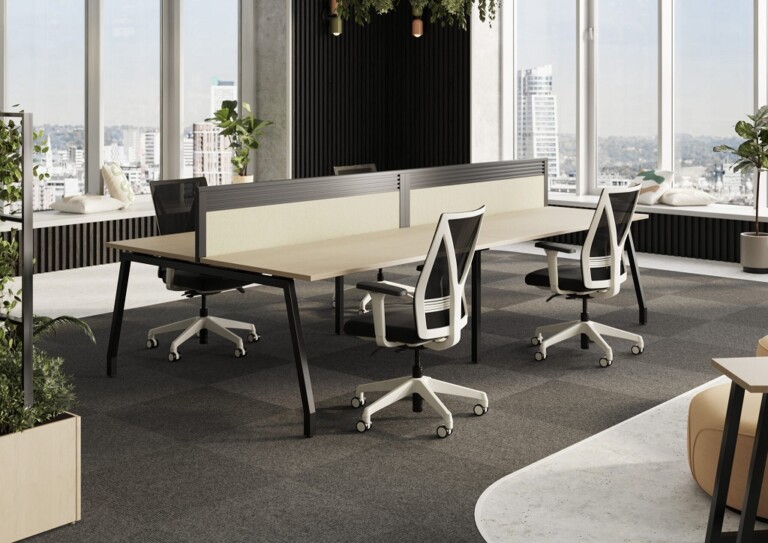
A four-person bench, for example, might consist of two employees sitting opposite another two employees. An eight-person configuration could extend this arrangement to accommodate four people along each side.
It’s important to consider more than the size of the desktops themselves. A complete office layout must also account for:
- Space to move office chairs comfortably.
- Access between workstations and surrounding furniture.
- Fire escape routes and accessibility requirements.
- Storage cupboards and filing units.
- Electrical sockets and data connections.
- Meeting rooms and collaborative areas.
For this reason, a desk arrangement that appears suitable on paper may require a different configuration once the wider office layout is considered.
Are Bench Desks Cheaper Than Individual Office Desks?
Bench desks can be more cost-effective when furnishing larger offices, but this is not always the case.
Because some bench systems share frames and supporting components, they can reduce the amount of material required per workstation. Purchasing several matching workstations may also simplify furniture specification and installation.
However, the overall cost depends on the product range, desktop materials, accessories and installation requirements.
| Cost Consideration | Bench Desks | Individual Desks |
|---|---|---|
| Desk frames | Shared components may reduce costs | Separate frames required |
| Initial purchase | Can offer good value for larger teams | Competitive for smaller quantities |
| Privacy screens | Common additional consideration | Optional depending on layout |
| Cable management | May be integrated into the system | Often required separately |
| Installation | Multiple desks may be assembled as one system | Each workstation assembled independently |
| Future changes | Expansion depends on compatible components | Individual desks can often be relocated |
| Storage | Personal storage may need adding | Storage can be specified per desk |
For businesses comparing costs, the most useful approach is to calculate the complete price per workstation rather than comparing desktop prices alone.
This should include seating, storage, monitor arms, screens, delivery and installation where required.
A lower-priced desk may not represent better value if additional accessories are needed to make the workstation suitable for everyday use.
Which Desks Are Better for Small Offices?
For smaller offices, the decision often comes down to the room’s dimensions and how employees need to work.
Bench desks can be particularly effective in rectangular rooms where several employees require similar workstations. A four-person bench, for example, may provide a compact arrangement while leaving space for storage or a small meeting area.
Individual desks may be more suitable for rooms with awkward corners, irregular layouts or employees who require different working surfaces.
Bench desks may be preferable when:
- Several employees perform similar tasks.
- The room has a relatively open, regular layout.
- The business wants a consistent furniture arrangement.
- Collaboration is a regular part of the working day.
Individual desks may be preferable when:
- Employees require different workstation sizes.
- The room has alcoves or awkward dimensions.
- Some positions need greater privacy.
- Workstations may need to be moved frequently.
The best way to determine which layout makes more effective use of a small office is to compare both options using accurate room measurements.
Our office space planning service helps businesses assess furniture arrangements before ordering, taking into account workstation requirements, circulation and the wider use of the space.
Which Desk Type Is Better for Open-Plan Offices?
Bench desks are frequently used in open-plan offices because they allow multiple workstations to be arranged in coordinated groups.
This can create an organised environment where teams sit together and communication is straightforward.
However, an effective open-plan office should offer more than rows of desks.
Employees may also need spaces for private conversations, video meetings and tasks requiring uninterrupted concentration.
A practical open-plan arrangement might include:
- Bench desks for teams that communicate regularly.
- Individual workstations for roles requiring additional space.
- Desk-mounted screens to reduce visual distractions.
- Meeting rooms for discussions and confidential conversations.
- Breakout areas for informal collaboration.
- Suitable storage to keep working areas organised.
Using a combination of furniture types can create a more balanced workplace than relying entirely on one desk style.
Are Bench Desks Suitable for Hybrid Working and Hot Desking?
Bench desks can be particularly useful in hybrid workplaces where employees divide their time between working remotely and attending the office.
Instead of assigning a permanent workstation to every employee, businesses may create shared desk areas that can be used by different team members throughout the week.
This approach can help reduce the number of unused workstations during quieter periods.
However, successful hot desking requires more than simply removing assigned seating.
Businesses should consider:
- Desk availability: Employees need to know that sufficient workstations will be available when they attend.
- Personal storage: Lockers or other storage solutions can provide somewhere for employees to keep belongings.
- Monitor and power connections: Shared desks should have suitable connections for different users.
- Adjustable seating: Chairs and workstation accessories need to accommodate employees with different requirements.
- Desk organisation: Clear arrangements for cleaning and clearing shared workstations help maintain a tidy environment.
Individual desks can also be used for hot desking. The advantage of bench systems is that they can create a consistent arrangement of workstations with coordinated accessories.
How to Reduce Noise and Improve Privacy with Bench Desks
One of the biggest concerns businesses have about bench desking is the potential for noise and distractions.
In a busy office, employees may be working on calls, discussing projects or holding informal conversations at nearby desks.
Fortunately, there are several ways to make shared workstations more comfortable.
Desk-mounted privacy screens
Screens positioned between workstations provide visual separation without completely isolating employees. Some fabric-covered acoustic screens can also help absorb sound.
Dedicated quiet working areas
Providing separate spaces for concentration gives employees somewhere to work when their tasks require fewer interruptions.
Telephone and meeting spaces
Employees making frequent calls may benefit from dedicated meeting rooms or office booths rather than conducting every conversation at their desks.
Thoughtful team positioning
Departments with high levels of telephone activity can be positioned away from teams undertaking concentration-heavy work.
Suitable workstation spacing
Avoid placing workstations so closely together that employees have difficulty moving their chairs or accessing their equipment.
Ultimately, acoustic performance depends on the entire office environment, not simply the type of desk being used.
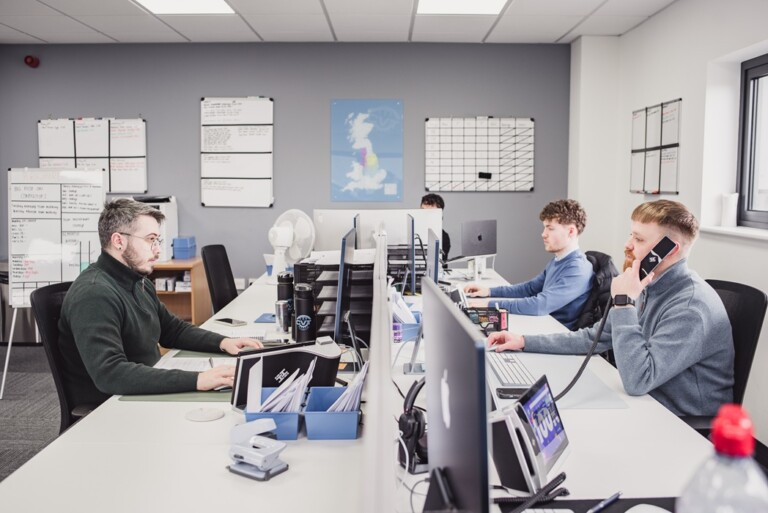
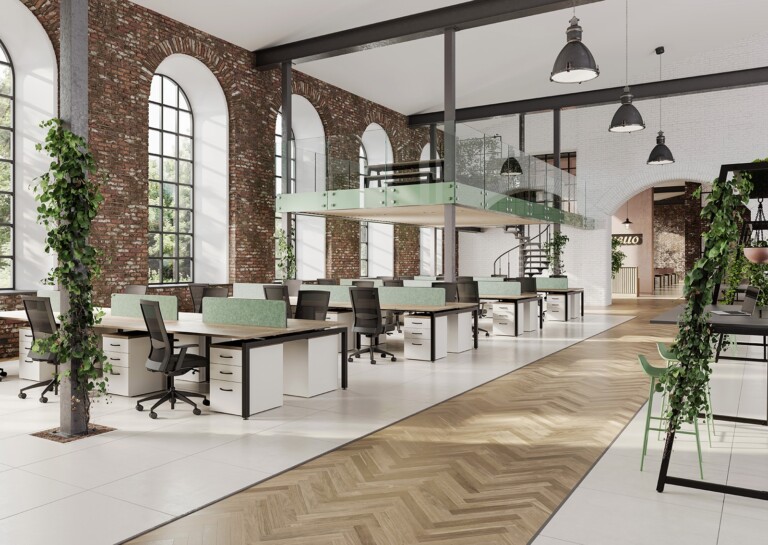
Real Office Examples: Bench Desks and Individual Workstations
The practical differences between bench desks and individual workstations become clearer when looking at how businesses use them in real offices.
At Leicester Office Furnishers, we’ve helped organisations select and install furniture based on their available space, employee requirements and preferred working arrangements.
CV Technical: Bench Desks for a Growing Recruitment Company
When CV Technical, an engineering recruitment company based in Hinckley, approached Leicester Office Furnishers, they needed a modern workspace that would support their growing team.
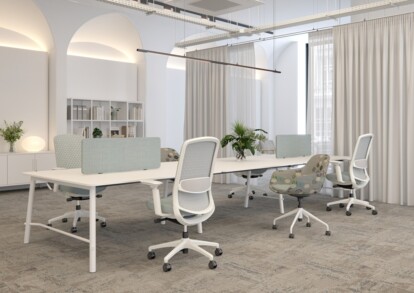
Following a visit to our Leicester showroom and discussions about the office layout, the business selected white bench desks for its main working area.
The installation also included light grey fabric screens, under-desk pedestal storage and mesh-back operator chairs.
The combination created a consistent workstation layout while providing employees with personal storage and visual separation.
You can see the completed project in our CV Technical office furniture case study.
Elmleigh: Individual Desks with Additional Working Space
For electrical company Elmleigh in Hinckley, the requirements were different.
The business selected individual oak-effect office desks, each measuring 1800mm wide, providing employees with generous surface space for paperwork and other working materials.
The desks were complemented by personal storage, desk-mounted screens and ergonomic office chairs.
Three sit-stand desks were also incorporated into the office, providing alternative working arrangements.
This project demonstrates how individual workstations can be particularly useful when employees require more personal desk space and varied furniture configurations.
Read our Elmleigh office furniture case study to see how the workspace was furnished.
Common Mistakes to Avoid When Choosing Office Desks
Whether you’re purchasing bench desks or individual workstations, several common mistakes can affect the finished office layout.
Choosing Desks Based on Price Alone
The cheapest workstation is not necessarily the most cost-effective option over its lifespan.
Frame quality, durability, accessories and ease of maintenance should all be considered alongside the initial purchase price.
Overlooking Employee Requirements
Not every employee performs the same tasks. Some may need dual monitors, large working surfaces or secure storage, while others require only a laptop and basic accessories.
Understanding these requirements helps avoid purchasing furniture that is unsuitable for everyday use.
Trying to Fit Too Many Workstations into One Room
Maximising desk numbers can appear attractive, particularly when office space is expensive.
However, overcrowding can restrict movement, increase distractions and make the workplace uncomfortable.
A successful layout should balance workstation capacity with practical circulation and supporting facilities.
Forgetting About Storage
Storage requirements can have a significant impact on office space.
Pedestals, cupboards, lockers and filing units should be incorporated into the original layout rather than added once all the desks have been installed.
Ignoring Future Business Growth
Businesses expecting to expand should consider whether additional workstations can be accommodated without major disruption.
This may influence the choice of desk system, available accessories and overall office arrangement.
So, Are Bench Desks or Individual Office Desks Better?
There isn’t one desk type that works best for every business.
Bench desks are often an excellent choice for open-plan offices where space efficiency, coordinated workstation layouts and everyday collaboration are priorities. They can also offer practical advantages when furnishing larger teams or introducing shared working arrangements.
Individual office desks are generally better suited to workplaces requiring greater separation, varied workstation sizes or the freedom to reposition desks independently.
For many businesses, the most practical solution is to combine both options.
Bench desks can accommodate collaborative departments, while individual workstations provide space for focused tasks, specialist equipment and private offices.
The important thing is to select furniture around the needs of your employees rather than making every workstation identical.
At Leicester Office Furnishers, we supply a wide selection of commercial office furniture, including bench desks, individual office desks, ergonomic seating and storage solutions.
We can also help with space planning, furniture specification and installation to ensure your chosen workstations fit comfortably within your workplace.
Frequently Asked Questions
Are bench desks more space-efficient than individual desks?
Bench desks can be more space-efficient because multiple workstations share structural components and are arranged in connected groups. However, the amount of space saved depends on the specific desk dimensions, room layout, chair clearance and access requirements. A measured floor plan is the most reliable way to compare the two options.
How many people can sit at a bench desk?
Bench desking systems commonly accommodate two, four, six or eight employees, although larger configurations are possible with certain modular ranges. The ideal number depends on the space available, workstation dimensions and the level of interaction required between employees.
Are bench desks cheaper than normal office desks?
Bench desks can offer better value when furnishing larger offices because shared frames and components may reduce the cost per workstation. However, pricing varies depending on the chosen manufacturer, materials, accessories and installation requirements. Individual desks may be more economical for smaller offices or where only a few workstations are required.
Can you add privacy screens to bench desks?
Yes. Many bench desking systems are compatible with desk-mounted privacy screens. These can help separate individual workstations, reduce visual distractions and, depending on the material, contribute to sound absorption within an open-plan office.
Are bench desks suitable for small businesses?
Yes. Bench desks can work particularly well for small businesses with several employees performing similar tasks. A two-person or four-person bench may create an efficient workstation arrangement without requiring numerous separate desk frames. However, individual desks may be more practical in smaller rooms with awkward dimensions.
What is the best desk size for an office worker?
Many office desks are available in widths of 1200mm, 1400mm, 1600mm and 1800mm. The most suitable size depends on the employee’s equipment, paperwork and available working space. Employees using several monitors or large documents may require a wider desk than those working primarily on a laptop.
Can bench desks be used for hot desking?
Yes. Bench desks are commonly used in hot-desking environments because they provide consistent workstations that can be shared by different employees. Suitable cable connections, adjustable seating and personal storage can help make shared desks more convenient.
Can you mix bench desks and individual desks in the same office?
Absolutely. Combining bench desks with standalone workstations allows businesses to create separate areas for collaboration and focused work. This approach can be particularly useful in offices with different departments, working styles and privacy requirements.