UK Paper Sizes Guide: A0 to A10 Dimensions in MM, CM & Inches
UK Paper Sizes Guide: A0 to A10 Dimensions in MM, CM & Inches
Whether you’re printing an important document, choosing a frame, preparing a poster or organising office paperwork, knowing the correct UK paper sizes can save time and prevent costly mistakes.
Most people recognise A4 as standard printer paper, but what about A3, A5 or A1? How big is A4 in inches? And which paper sizes fit standard filing cabinets and office storage?
In the UK, paper sizes generally follow the international ISO 216 A-series standard, with sizes ranging from large A0 sheets through to much smaller formats such as A8, A9 and A10.
This guide explains the dimensions of every A-series paper size in millimetres, centimetres and inches, alongside common uses, envelope sizes, printing advice and practical ways to store documents in the workplace.
Key Takeaways
- A4 is the standard UK printer paper size, measuring 210 × 297mm (21 × 29.7cm or approximately 8.27 × 11.69 inches).
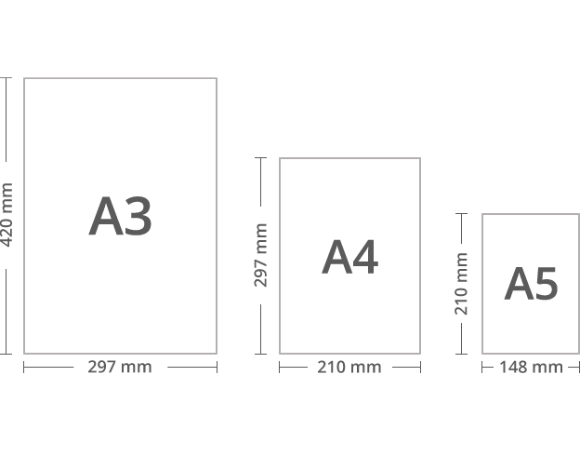
- A3 is twice the area of A4, measuring 297 × 420mm, and is commonly used for posters, drawings and larger spreadsheets.
- A5 is half the area of A4, measuring 148 × 210mm, making it popular for notebooks, flyers and booklets.
- A0 is the largest conventional A-series sheet, measuring 841 × 1189mm, and is often used for technical drawings and large-format printing.
- Each successive A-series size has approximately half the area of the previous size, allowing documents to be scaled without changing their proportions.
- Document storage should match the paper format, with standard office filing cabinets typically designed for A4 filing systems and specialist storage used for larger drawings.
UK Paper Sizes Chart: A0 to A10 in MM, CM and Inches
The table below provides a quick reference for all standard UK A-series paper sizes. Measurements are shown with the shorter side first, so they can be used in either portrait or landscape orientation.
| Paper Size | Millimetres (mm) | Centimetres (cm) | Inches (approx.) |
|---|---|---|---|
| A0 | 841 × 1189 | 84.1 × 118.9 | 33.11 × 46.81 |
| A1 | 594 × 841 | 59.4 × 84.1 | 23.39 × 33.11 |
| A2 | 420 × 594 | 42 × 59.4 | 16.54 × 23.39 |
| A3 | 297 × 420 | 29.7 × 42 | 11.69 × 16.54 |
| A4 | 210 × 297 | 21 × 29.7 | 8.27 × 11.69 |
| A5 | 148 × 210 | 14.8 × 21 | 5.83 × 8.27 |
| A6 | 105 × 148 | 10.5 × 14.8 | 4.13 × 5.83 |
| A7 | 74 × 105 | 7.4 × 10.5 | 2.91 × 4.13 |
| A8 | 52 × 74 | 5.2 × 7.4 | 2.05 × 2.91 |
| A9 | 37 × 52 | 3.7 × 5.2 | 1.46 × 2.05 |
| A10 | 26 × 37 | 2.6 × 3.7 | 1.02 × 1.46 |
Quick answer: Standard UK printer paper is A4, measuring 210 × 297mm. The next size up is A3, while A5 is the next size down.
Although A4 is the most frequently used format in offices, understanding the full paper size chart is useful when preparing documents for printing, purchasing stationery or selecting filing and storage furniture.
What Are the Standard UK Paper Sizes?
The UK primarily uses the A-series paper sizing system defined by ISO 216, an international standard also widely used across Europe and many other countries.
The system is based on a consistent aspect ratio of approximately 1:1.414, also expressed as 1:√2.
This means that when a sheet is divided in half parallel to its shorter edge, the resulting sheets maintain the same overall proportions.
For example:
- One A0 sheet has approximately the same area as two A1 sheets.
- One A1 sheet has approximately the same area as two A2 sheets.
- One A2 sheet has approximately the same area as two A3 sheets.
- One A3 sheet has approximately the same area as two A4 sheets.
- One A4 sheet has approximately the same area as two A5 sheets.
The dimensions are rounded to whole millimetres under the standard, so dividing one printed measurement in half does not always produce the next measurement exactly to the millimetre.
This consistency makes the system particularly useful for printing, photocopying, document design and preparing different versions of the same material.
A0 Paper Size: Dimensions and Uses
A0 measures 841 × 1189mm, or approximately 33.11 × 46.81 inches.
A0 is the largest standard A-series format commonly encountered in professional printing. It has a nominal area of one square metre and is primarily used where detailed information or large visuals need to be displayed.
Common A0 uses include:
- Architectural drawings and building plans.
- Engineering schematics and technical diagrams.
- Large exhibition posters.
- Detailed maps and presentation drawings.
- Design and construction documentation.
Printing A0 documents generally requires a large-format printer or plotter, as ordinary desktop office printers cannot accommodate sheets of this size.
For storage, A0 drawings are often kept flat in specialist plan chests or transported in protective drawing tubes. Where documents need to be accessed regularly, flat storage can help reduce creasing and damage.
A1 Paper Size: Dimensions and Uses
A1 measures 594 × 841mm, or approximately 23.39 × 33.11 inches.
A1 is half the area of A0 and is commonly used for large-format documents that require more detail than smaller paper sizes can comfortably display.
Typical uses include architectural plans, technical drawings, posters, presentation charts and educational displays.
Businesses working with detailed drawings may use A1 documents during project meetings or design reviews, particularly where several people need to examine the same information.
Like A0, A1 generally requires specialist printing equipment and is best stored flat when preserving the condition of the document is important.
A2 Paper Size: Dimensions and Uses
A2 measures 420 × 594mm, or approximately 16.54 × 23.39 inches.
A2 offers a useful balance between display space and portability. It is large enough for posters and detailed graphics but easier to handle than A0 or A1 sheets.
Common applications include:
- Office notices and information posters.
- Presentation boards and visual reports.
- Technical drawings and diagrams.
- Marketing displays.
- Educational charts and teaching materials.
A2 documents may be kept in oversized folders, plan drawers or suitable flat storage cabinets. Standard A4 filing drawers are generally unsuitable unless the document is folded, which may not be appropriate for important originals.
A3 Paper Size: Dimensions and Uses
A3 measures 297 × 420mm, or approximately 11.69 × 16.54 inches.
A3 is twice the area of A4 and is one of the most useful larger paper sizes in the workplace.
It provides additional space for documents that would appear crowded on a standard A4 page, particularly when displaying multiple columns, charts or detailed graphics.
A3 is frequently used for:
- Large spreadsheets and financial reports.
- Office posters and staff notices.
- Organisation charts and workflow diagrams.
- Training materials.
- Design sketches and presentations.
- Technical drawings.
Many business photocopiers and multifunction printers support A3 printing, although smaller desktop machines may be limited to A4.
When storing A3 documents, check the internal dimensions of your filing furniture. Wide drawers, suitable shelving and larger document cabinets may be needed if sheets must remain flat.
A4 Paper Size in the UK: MM, CM and Inches
A4 measures 210 × 297mm, 21 × 29.7cm or approximately 8.27 × 11.69 inches.
A4 is the standard paper size used for everyday printing and documentation in the UK.
It is widely supported by office printers, photocopiers, scanners and document management equipment, making it the most practical format for routine business paperwork.
Common A4 documents include:
- Business letters and correspondence.
- Contracts and agreements.
- Invoices and financial paperwork.
- Employee records and HR forms.
- Meeting agendas and reports.
- CVs and application documents.
- Instruction manuals and office notices.
Most standard office filing systems are designed around A4 documents or the folders used to hold them.
This includes lever arch files, ring binders, suspension files and many filing cabinets.
However, a filing cabinet needs to accommodate the complete folder or suspension file, not just the dimensions of a loose A4 sheet. This distinction is important when selecting office filing cabinets for a workplace.
A5 Paper Size: Dimensions and Uses
A5 measures 148 × 210mm, or approximately 5.83 × 8.27 inches.
A5 is approximately half the area of A4 and is particularly useful when a smaller, more portable document is required.
It is commonly used for:
- Notebooks and journals.
- Printed booklets.
- Meeting notes and compact agendas.
- Flyers and information leaflets.
- Training handbooks.
- Small promotional materials.
A5 documents are easier to carry than A4 and often require less storage space. They can be organised in smaller folders, trays, desk drawers or document organisers.
For businesses that regularly distribute short guides or handouts, A5 can also be a practical alternative to full-size A4 pages.
A6 Paper Size: Dimensions and Uses
A6 measures 105 × 148mm, or approximately 4.13 × 5.83 inches.
A6 is half the area of A5 and is commonly associated with postcards and compact printed materials.
Typical examples include:
- Postcards and promotional cards.
- Small invitations.
- Appointment reminders.
- Compact instruction cards.
- Promotional vouchers.
A6 materials can be stored in small desktop organisers, stationery drawers and labelled document boxes.
A7, A8, A9 and A10 Paper Sizes
The smaller A-series formats are less commonly used for ordinary office paperwork, but they still have practical applications.
| Paper Size | Dimensions | Typical Uses |
|---|---|---|
| A7 | 74 × 105mm | Small information cards, labels and tickets |
| A8 | 52 × 74mm | Small cards, tags and printed labels |
| A9 | 37 × 52mm | Miniature labels and specialist printed items |
| A10 | 26 × 37mm | Very small labels and specialist applications |
These smaller formats are usually stored in compartments, envelopes, stationery trays or organisers rather than conventional filing cabinets.
Where large quantities of small printed items are handled, clearly labelled storage can help prevent items becoming mixed together or lost.
A3 vs A4 vs A5: What’s the Difference?
A3, A4 and A5 are among the most frequently encountered paper sizes in UK workplaces.
The main differences are their dimensions, available printing area and typical applications.
| Feature | A3 | A4 | A5 |
|---|---|---|---|
| Dimensions | 297 × 420mm | 210 × 297mm | 148 × 210mm |
| Size comparison | Twice A4 area | Standard reference | Half A4 area |
| Common uses | Posters, charts, drawings | Letters, contracts, reports | Booklets, flyers, notebooks |
| Typical printing | A3-capable office printer | Standard office printer | Compatible printer or A4 booklet printing |
| Storage | Larger folders or wide cabinets | Standard office filing systems | Small folders or desk organisers |
Which should you choose? A4 is generally the most convenient choice for everyday documents. A3 is better when additional space is required for charts or visual information, while A5 works well for compact documents and portable printed materials.
UK Paper Sizes vs US Letter and Legal Paper
Although the UK predominantly uses A-series paper sizes, businesses working with organisations in the United States may receive documents designed for Letter or Legal paper.
These formats have different dimensions and may not print correctly unless the appropriate settings are selected.
| Paper Format | Dimensions (mm) | Dimensions (inches) |
|---|---|---|
| UK A4 | 210 × 297 | 8.27 × 11.69 |
| US Letter | 215.9 × 279.4 | 8.5 × 11 |
| US Legal | 215.9 × 355.6 | 8.5 × 14 |
US Letter is slightly wider but shorter than A4, while US Legal is considerably longer.
If you print a US Letter document onto A4 paper, your software may automatically scale the contents. Always check the print preview, especially for documents with precise margins, tables or forms.
UK Envelope Sizes: Which Envelope Fits A4, A5 or A6?
Choosing the right envelope is just as important as selecting the correct paper size, particularly when sending contracts, invoices, letters and promotional materials.
UK envelope sizes commonly include C-series formats, along with DL envelopes for folded A4 correspondence.
| Envelope Size | Dimensions (mm) | Suitable Contents |
|---|---|---|
| C4 | 229 × 324 | Unfolded A4 sheets |
| C5 | 162 × 229 | Unfolded A5 or A4 folded once |
| C6 | 114 × 162 | Unfolded A6 or A4 folded twice |
| DL | 110 × 220 | A4 folded into thirds |
For standard business letters, DL envelopes are a common choice because an A4 sheet can be folded into three equal sections.
If you need to send an A4 contract without folding it, a C4 envelope is generally more appropriate.
Paper Sizes in Pixels: A4, A3 and A5 at 300 DPI
When preparing documents for digital printing, designers may need paper dimensions expressed in pixels rather than millimetres.
The required pixel dimensions depend on the intended print resolution, commonly measured in dots per inch (DPI).
At 300 DPI, the approximate pixel dimensions are:
| Paper Size | Pixels at 300 DPI |
|---|---|
| A3 | 3508 × 4961 |
| A4 | 2480 × 3508 |
| A5 | 1748 × 2480 |
| A6 | 1240 × 1748 |
These dimensions are useful when creating raster images for printing. However, PDF documents containing vector text and graphics can retain sharp edges when scaled, so pixel dimensions are not always the most important factor.
For professional print jobs, check the printer’s requirements for resolution, bleed and margins before finalising artwork.
What Does GSM Mean for Office Paper?
GSM stands for grams per square metre. It measures the mass of paper relative to its area and is commonly used to describe paper weight.
Although heavier paper often feels thicker, GSM is not a direct measurement of thickness. Two papers with the same GSM may have different thicknesses depending on their composition and finish.
Common paper weights include:
| Paper Weight | Common Applications |
|---|---|
| 70–80gsm | Everyday printing and general office correspondence |
| 90–100gsm | Reports, letters and higher-quality office documents |
| 120–170gsm | Presentations, leaflets and promotional materials |
| 200–300gsm | Heavier covers, invitations and card-like materials |
| 300gsm+ | Heavy card, packaging and specialist print work |
For most everyday office printing, 80gsm A4 paper is a familiar and practical option.
Always check your printer’s supported paper weights before using thicker media, as some machines may struggle to feed heavy card or specialist paper.
How to Choose the Right Paper Size for Office Printing
Selecting an appropriate paper size can improve document readability, help reduce unnecessary printing and make paperwork easier to organise.
Before printing, consider the following:
- Purpose: Is the document intended for reading, displaying, presenting or filing?
- Amount of information: Will the text, charts and images remain clear at the chosen size?
- Printer compatibility: Can your printer accommodate the selected dimensions and paper weight?
- Storage requirements: Will the printed document fit existing folders, drawers or cabinets?
- Distribution: Does the document need to fit a particular envelope or presentation folder?
- Print quantities: Could a smaller format reduce paper consumption without affecting usability?
For example, an internal office notice might be easier to read on A3, while a standard business letter is generally more practical on A4.
There is no single paper size suitable for every situation. Choosing the right format means balancing presentation, convenience and the way the document will be used.
How to Store Different Paper Sizes in the Office
Understanding paper dimensions is useful when selecting office furniture because not every cabinet, drawer or storage unit is suitable for every document format.
A4 paperwork can usually be organised using conventional filing systems, while A3 and larger documents may require specialist furniture or dedicated shelving.
Organised storage also helps reduce clutter, protects important paperwork and makes it easier for employees to find documents when needed.
Filing Cabinets for A4 Documents
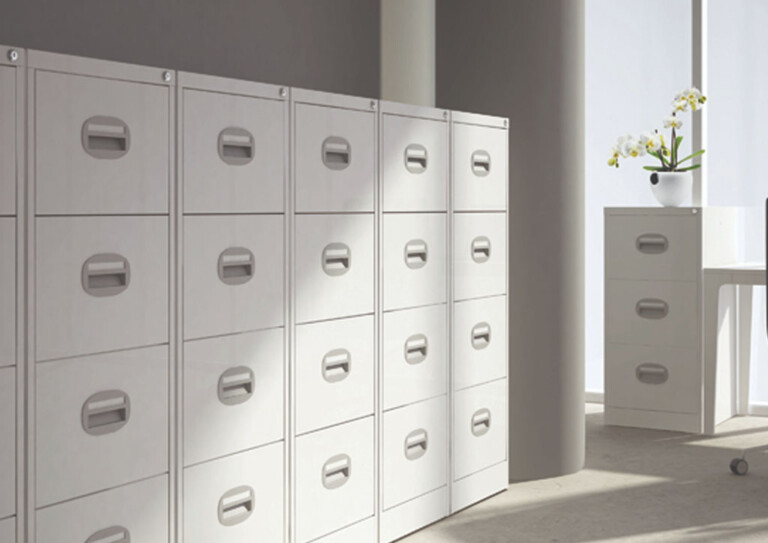
Traditional filing cabinets are widely used for business records, contracts, correspondence and other A4 paperwork.
Depending on the cabinet design, documents may be stored in suspension files, folders or individual drawers.
When choosing a filing cabinet, consider:
- The size and format of the folders being stored.
- The number of documents requiring filing.
- Available floor space.
- Locking requirements for confidential paperwork.
- Drawer extension and access clearance.
- Whether additional filing capacity may be needed in future.
Leicester Office Furnishers supplies a range of filing cabinets, including options suitable for general office paperwork and document archiving.
Office Cupboards for General Document Storage
Not every document needs to be kept in a dedicated filing cabinet.
Office cupboards can provide storage for ring binders, lever arch files, stationery and other workplace materials.
They can also help keep paperwork out of sight, creating a more organised and professional working environment.
Adjustable shelving is particularly useful where different folder sizes or storage boxes need to be accommodated.
Explore the range of office storage cupboards available from Leicester Office Furnishers for workplace document organisation.
Desk Storage and Pedestals
For paperwork that employees use regularly, keeping documents close to the workstation can be more convenient than using a shared filing cabinet elsewhere in the office.
Desk pedestals and under-desk drawers provide compact storage for stationery, folders and frequently accessed documents.
Some pedestal configurations are designed to accommodate suspension files, while others have standard drawers for general office supplies.
Check the internal drawer dimensions and intended filing format before purchasing.
Storage for A3, A2, A1 and A0 Drawings
Larger documents require additional consideration, particularly when they contain technical information that must remain legible and undamaged.
Suitable options may include:
- Wide drawers or flat filing cabinets for A3 and larger sheets.
- Plan chests for architectural and engineering drawings.
- Protective drawing tubes for transporting large-format documents.
- Oversized shelving and document boxes.
- Dedicated archive storage for infrequently accessed paperwork.
For businesses that handle multiple document sizes, combining suitable storage systems may provide a more practical solution than attempting to fit everything into conventional filing cabinets.
Which Office Storage Is Best for Each Paper Size?
| Paper Size | Recommended Storage | Typical Workplace Use |
|---|---|---|
| A0–A1 | Plan chests or drawing tubes | Architectural plans and engineering drawings |
| A2 | Flat drawers or oversized document storage | Posters and technical documents |
| A3 | Wide filing drawers, portfolios or shelving | Charts, drawings and reports |
| A4 | Filing cabinets, cupboards and binders | Contracts, invoices and correspondence |
| A5 | Desk drawers, folders and compact organisers | Notebooks, booklets and handouts |
| A6–A10 | Compartments, envelopes and small storage boxes | Cards, labels and small printed items |
These are general recommendations. Always check the internal dimensions of furniture, including any folder, binder or suspension filing system that will be used.
For businesses updating their workplace, selecting suitable storage is an important part of creating an organised and functional office.
Leicester Office Furnishers can help with commercial office furniture, including filing cabinets, cupboards, desks and other storage solutions for workplaces of different sizes.
Frequently Asked Questions About UK Paper Sizes
What is the standard paper size in the UK?
The standard UK printer paper size is A4, measuring 210 × 297mm, or approximately 8.27 × 11.69 inches. A4 is commonly used for letters, contracts, invoices, reports and general office documents.
What size is A4 paper in inches?
A4 paper measures approximately 8.27 × 11.69 inches. In metric measurements, it is 210 × 297mm or 21 × 29.7cm.
Is A3 twice the size of A4?
Yes. A3 has approximately twice the area of A4. A3 measures 297 × 420mm, while A4 measures 210 × 297mm. The proportions remain consistent across the A-series.
Is A5 half the size of A4?
Yes. A5 has approximately half the area of A4. A5 measures 148 × 210mm and is commonly used for notebooks, booklets and smaller printed materials.
What paper size is bigger than A4?
A3 is the next standard A-series size larger than A4. Larger formats include A2, A1 and A0. The smaller the number after the letter A, the larger the sheet.
What paper size is smaller than A4?
A5 is the next standard size smaller than A4. Other smaller formats include A6, A7, A8, A9 and A10.
Is UK A4 the same as US Letter paper?
No. UK A4 measures 210 × 297mm, while US Letter measures 215.9 × 279.4mm. US Letter is slightly wider but shorter than A4, so printing documents between the two formats may require scaling or margin adjustments.
What size envelope fits A4 paper?
A C4 envelope is suitable for an unfolded A4 sheet. A C5 envelope can hold A4 folded once, while a DL envelope is commonly used for A4 folded into thirds.
What size paper fits in an office filing cabinet?
Many standard office filing cabinets are designed for A4 suspension files or document folders. However, the exact compatibility depends on the cabinet and filing system. Larger formats such as A3 may require wider drawers or specialist document storage.
What does 80gsm paper mean?
80gsm means the paper has a mass of 80 grams per square metre. It is a common weight for everyday office printer paper. GSM measures paper weight per unit area rather than thickness directly.
Organise Your Office Documents With Leicester Office Furnishers
Understanding UK paper sizes makes it easier to select the correct printing format, organise documents and choose suitable office storage.
From everyday A4 paperwork to larger reports and specialist drawings, different documents require different filing and storage solutions.
At Leicester Office Furnishers, we supply a wide range of commercial office furniture, including filing cabinets, storage cupboards, desks and practical workplace storage solutions.
Whether you’re furnishing a new office, replacing outdated filing cabinets or looking for ways to improve document organisation, our team can help you find suitable furniture for your requirements.
Explore our filing cabinets or discover our office furniture solutions to create a more organised and functional workplace.