Benefits of Office Breakout Areas: 10 Reasons to Create One

The modern office is no longer just a collection of desks, meeting rooms and filing cabinets. Businesses are increasingly creating flexible spaces where employees can step away from their main workstation, catch up with colleagues, hold informal meetings or simply take a proper break.
This is where an office breakout area comes in.
A well-designed breakout space can become one of the most versatile areas in a workplace. Depending on its layout and furniture, it might be used for a morning coffee, an impromptu team discussion, focused laptop work, lunch or a quick change of scenery during the working day.
But what are the real benefits of office breakout areas, and are they worth giving up valuable floor space for?
Key Takeaways
- Office breakout areas provide employees with an alternative to working at their desks all day.
- They can support informal meetings, collaboration, flexible working and staff breaks.
- Breakout spaces can make better use of underutilised areas within an office.
- Different furniture can create social, collaborative and quieter zones within the same space.
- Breakout areas can be particularly useful in open-plan and hybrid workplaces.
- The right layout and furniture are important if the area is going to be genuinely useful rather than simply decorative.
What Is an Office Breakout Area?
An office breakout area is a space away from employees’ usual workstations that can be used for informal activities.
Unlike a traditional meeting room, a breakout space does not necessarily have one fixed purpose.
Employees might use it to:
- Take a coffee or lunch break
- Have an informal conversation with a colleague
- Hold a quick team meeting
- Work on a laptop away from their usual desk
- Brainstorm ideas
- Make a phone or video call
- Meet visitors in a less formal environment
- Work independently in a quieter part of the office
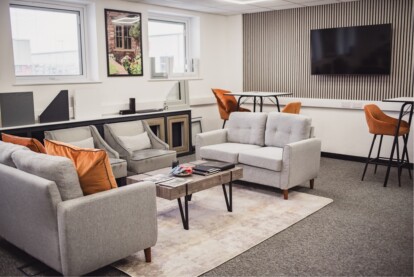
Breakout areas can range from a small corner containing a sofa and coffee table to larger collaborative zones containing booths, café furniture, acoustic seating and enclosed office pods.
The right breakout furniture is therefore an important part of creating a space that employees will actually use.
1. Gives Employees Somewhere Away From Their Desks
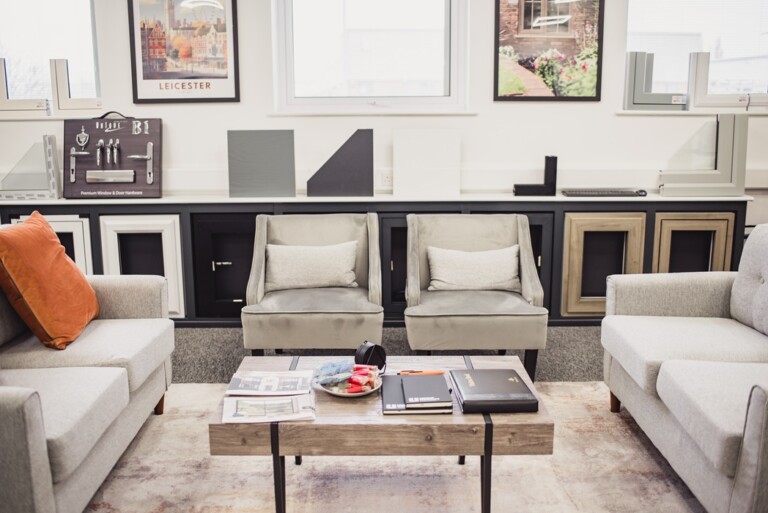
One of the simplest benefits of an office breakout area is that it provides somewhere different to sit.
Spending the entire working day at the same desk can become repetitive, particularly for employees working primarily on computers.
A breakout area gives people somewhere to change their surroundings without having to leave the workplace completely.
Even a relatively small space containing comfortable seating and a table can give employees somewhere to have a coffee, read through documents or catch up with a colleague away from their normal workstation.
2. Creates Space for Informal Meetings
Not every conversation needs a formal meeting room.
Sometimes two or three people simply need somewhere to sit down for ten minutes and discuss a project.
Using a large boardroom for this can be unnecessary, while holding the conversation beside someone’s desk may disturb the people working nearby.
Breakout furniture can create useful spaces for these smaller conversations.
A booth, sofa area or café-style table can provide a more relaxed setting for quick meetings without occupying one of the office’s formal meeting rooms.
3. Encourages Collaboration
Some of the most useful conversations in a workplace are not scheduled meetings.
Employees may want to quickly discuss an idea, look over something on a laptop or bring several colleagues together to solve a problem.
A breakout area gives teams somewhere designed for this type of informal collaboration.
Modular seating, larger tables and comfortable booths can all help create areas where several people can work together without needing to book a meeting room every time.
4. Makes Better Use of Unused Office Space
Not every part of an office naturally lends itself to traditional rows of desks.
There may be corners, awkward spaces or open areas that would otherwise remain underused.
These spaces can sometimes be turned into useful breakout zones.
A small unused area might accommodate several lounge chairs and a coffee table, while a larger space could incorporate sofas, collaborative tables, booths or café-style furniture.
Good office space planning can help identify where breakout furniture can be introduced without negatively affecting movement around the workplace.
5. Supports Hybrid and Flexible Working
Hybrid working has changed the way many employees use offices.
Someone who only visits the workplace on certain days may not always need a permanently assigned desk. Instead, they may need access to different types of spaces depending on what they are doing.
A breakout area can provide another option.
Employees might use a collaborative table for a team discussion, sit in a booth for focused work or use a café-style area for a short period between meetings.
Providing several different types of working environment can make an office more adaptable to changing patterns of work.
6. Provides Somewhere to Take a Proper Break
A breakout area does not always need to be productive.
Sometimes its purpose is simply to give employees somewhere comfortable to take a break.
Creating a space away from normal workstations can help distinguish break time from working time.
Soft seating, coffee tables, plants and café-style furniture can make the area feel deliberately different from the main office.
This can be particularly valuable in workplaces where there is otherwise nowhere comfortable to sit away from a desk.
7. Can Reduce Pressure on Meeting Rooms
Meeting rooms can quickly become difficult to book, especially in busy workplaces.
Yet many meetings do not require a completely enclosed conference room.
A two-person catch-up or short brainstorming session might work perfectly well in a breakout booth or informal seating area.
Providing different places for different types of conversations can help reserve formal meeting rooms for situations where privacy, presentation equipment or larger seating capacity is genuinely required.
For conversations that do require more privacy, office pods can also provide enclosed meeting and working spaces without necessarily requiring permanent walls.

8. Creates Different Zones Within an Open-Plan Office
One of the challenges of open-plan workplaces is creating variety within a large shared environment.
Breakout furniture can help divide an office into different functional zones.
For example, one area might contain soft seating for relaxed conversations, while another could include high tables for collaborative work.
High-back seating and acoustic booths can also help visually separate spaces and create a greater feeling of privacy.
This allows businesses to introduce different working environments without necessarily constructing additional rooms.
9. Can Create a More Welcoming Workplace
Furniture has a major influence on how a workplace feels.
An office made entirely from rows of desks can feel very different from one that also incorporates comfortable seating, collaborative spaces and areas where people can interact more informally.
Breakout furniture also provides an opportunity to introduce different colours, textures and furniture styles.
Sofas, lounge chairs, booths and café furniture can create a less formal atmosphere while still complementing the wider office design.
These spaces may also be useful for informal conversations with visitors where a formal boardroom is unnecessary.
10. Makes the Workplace More Flexible
Perhaps the biggest advantage of a breakout area is versatility.
The same space could be used for several completely different activities throughout the day.
In the morning, it might be used for an informal team meeting.
At lunchtime, employees might use the area to eat and socialise.
Later in the afternoon, someone could use the same space to work quietly on a laptop.
Choosing flexible furniture makes this even easier. Modular seating can be reconfigured, movable tables can support different activities and booths or pods can introduce quieter working environments.
This allows the workplace to adapt rather than dedicating every square metre to one specific purpose.
What Furniture Should an Office Breakout Area Include?
There is no single type of furniture that every breakout area needs.
The right combination depends on the amount of space available and how employees are expected to use it.
Popular options include:
Soft Seating
Sofas and lounge chairs work particularly well in relaxed breakout spaces and informal meeting areas.
Modular Seating
Modular furniture can be arranged in different configurations, making it useful where the layout may need to change over time.
High-Back & Acoustic Seating
High-back seating can provide more visual and acoustic separation within larger open-plan workplaces.
Café Tables & Chairs
Café-style furniture can work well for lunches, informal conversations and temporary laptop work.
Privacy Booths
Booths provide a more enclosed environment for conversations, collaboration and focused work.
Office Pods
Fully enclosed pods can provide additional acoustic privacy for calls, meetings and concentrated work.
Study Carrels
Individual workspaces can be incorporated where employees need somewhere quieter to focus away from their main workstation.
What Makes a Good Office Breakout Area?
Simply placing a sofa in the corner of the office does not automatically create an effective breakout space.
Think about what you actually want employees to use the area for.
If the priority is informal collaboration, provide tables and seating that allow people to comfortably work together.
If employees need somewhere to relax, softer lounge furniture may be more appropriate.
Where privacy is important, booths, acoustic furniture or enclosed pods may be required.
You should also consider:
- The number of people likely to use the area
- Available floor space
- Movement and circulation
- Access to power sockets
- Noise levels
- Furniture durability
- Upholstery and cleanability
- Lighting
- Privacy
- How the furniture fits with the wider office design
Planning these elements together can make the difference between a breakout area that looks attractive and one that employees genuinely use.
Do Small Offices Need Breakout Areas?
Breakout spaces are not limited to large corporate offices.
Smaller workplaces can benefit too.
You do not necessarily need a dedicated room. An unused corner, section of a kitchen area or space beside existing workstations could potentially become a useful informal zone.
Compact sofas, café tables, high-back chairs or a small booth can provide an alternative working environment without taking up a large amount of floor space.
The key is choosing furniture that is proportionate to the available area.
Office Breakout Area FAQs
What is the purpose of an office breakout area?
An office breakout area gives employees a flexible space away from their normal workstations. It can be used for breaks, informal meetings, collaboration, temporary work and social interaction.
What is the difference between a breakout area and a meeting room?
A meeting room is generally a dedicated enclosed space designed specifically for meetings. A breakout area is usually more informal and flexible, allowing the same space to be used for meetings, breaks, collaboration and individual work.
What furniture is best for an office breakout area?
This depends on how the space will be used. Common options include sofas, modular seating, lounge chairs, café tables, stools, privacy booths, acoustic furniture and office pods.
Can breakout areas be used for work?
Yes. Many breakout spaces are designed to support both relaxation and work. Tables, booths, power access and comfortable seating can make them suitable for laptop work, informal meetings and collaboration.
How much space does an office breakout area need?
There is no fixed minimum size. A breakout area could be a small seating arrangement in an unused corner or a much larger dedicated zone. The furniture and layout should be selected according to the available space and intended use.
Create a Breakout Area That Works for Your Workplace
A well-planned breakout space can provide far more than somewhere for employees to have a coffee.
It can create additional places for collaboration, informal meetings, focused work and staff breaks while making better use of the available office space.
Leicester Office Furnishers supplies a wide range of breakout furniture, including modular seating, privacy booths, café furniture and flexible workplace solutions.
Whether you are creating a new breakout area or improving an existing workspace, our team can help with furniture selection, space planning, delivery and installation.